

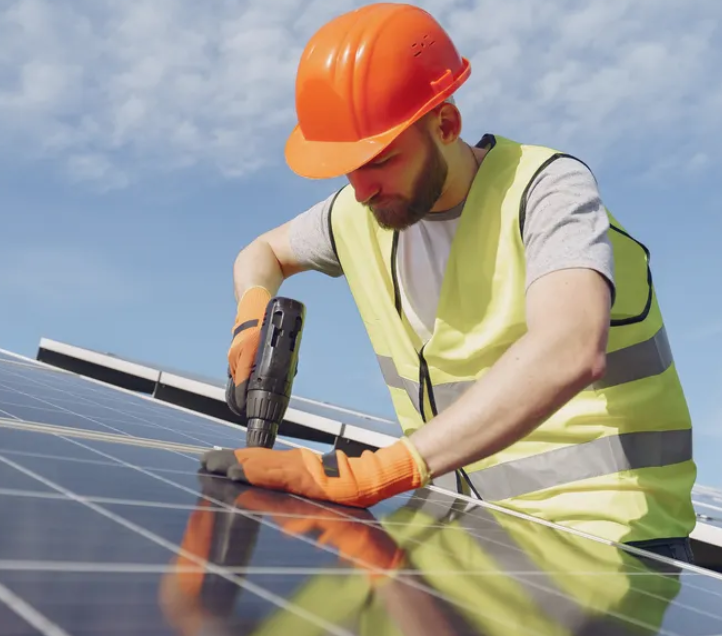
Improving Solar Installation Workflows with ERP Software
Solar power projects are growing fast across residential, commercial, and industrial sectors. Every year more contractors join the solar installation market. However, many installation companies still manage their operations using spreadsheets, emails, and disconnected tools. This often creates confusion in project tracking, inventory management, billing, and team coordination.
We have seen many solar installation businesses struggle with delays, miscommunication, and budgeting issues simply because their systems are not connected. This is exactly where solar panels ERP construction software becomes important. It helps solar contractors manage projects, teams, materials, finances, and customers in one organized platform.
Similarly, when we worked with several solar installation teams, they told us the biggest challenge was tracking multiple installations happening in different locations. They needed a centralized system. An ERP platform built for construction and energy projects can solve this problem.
In this article, we will explain how solar companies can manage installation projects efficiently using solar panels ERP construction software, and why it is becoming essential for modern solar contractors.
Solar Installation Projects Demand Better Operational Control
Solar installation projects look simple from the outside. But when we actually work on them, they involve multiple tasks and teams.
Typical solar installation projects include:
- Site inspection and feasibility study
- Design and engineering
- Procurement of panels, inverters, and mounting systems
- Installation scheduling
- Workforce coordination
- Safety checks
- Billing and documentation
However, managing these steps manually creates problems. Teams often lose track of materials, project deadlines shift, and communication between engineers and installers becomes messy.
This is where solar panels ERP construction software helps by connecting all departments inside a single system.
They can track installation progress, manage materials, assign technicians, and generate invoices without switching between multiple tools.
Still, many solar companies rely on disconnected systems. In comparison to a centralized ERP, this approach creates delays and errors.
Why Solar Installers Are Moving Toward Digital Construction Management
The solar industry is expanding rapidly. Installers must handle more projects every month. As workload increases, manual systems become unreliable.
We noticed several reasons why solar installers adopt solar panels ERP construction software.
1. Managing Multiple Installation Sites
Solar contractors often work on many sites at the same time.
Without a centralized system, it becomes hard to track:
- Project progress
- Team assignments
- Material delivery
- Installation timelines
However, ERP software provides a dashboard that shows all projects in one place.
2. Real Time Team Coordination
Installation teams, engineers, and project managers must stay connected.
With ERP systems:
- Teams receive task updates instantly
- Managers assign installation jobs quickly
- Field technicians report progress from mobile devices
Likewise, communication becomes smoother between office teams and field workers.
3. Financial Tracking for Solar Projects
Solar projects include many expenses such as:
- Panels
- Inverters
- Mounting hardware
- Wiring
- Labor costs
A centralized ERP platform helps companies track project budgets and spending clearly.
In the same way, companies avoid financial surprises during installations.
How Solar Panels ERP Construction Software Simplifies Project Planning
Planning is one of the most critical parts of solar installation. A poorly planned project often causes delays and customer dissatisfaction.
This is why many installers rely on solar panels ERP construction software for planning and scheduling.
Key planning features include
- Project scheduling tools
- Task assignment for installation teams
- Equipment and material tracking
- Timeline monitoring
Similarly, managers can see which project is ahead or behind schedule.
If delays occur, they can adjust schedules quickly.
Admittedly, many solar installers used spreadsheets earlier. But as the number of projects grows, spreadsheets stop working effectively.
ERP systems provide structured planning tools that simplify project coordination.
Using ERP Solution for Construction Industry to Manage Solar Installation Operations
Solar installation companies share many similarities with construction businesses. Both manage project sites, labor, materials, equipment, and deadlines.
Because of this similarity, many solar installers adopt an erp solution for construction industry.
These ERP platforms provide tools designed for project based work.
Typical modules include:
- Project management
- Procurement management
- Inventory tracking
- Financial accounting
- Vendor management
Similarly, solar contractors benefit from structured workflows that construction ERP systems already provide.
In comparison to generic business software, construction ERP systems fit better for project driven industries.
They allow installers to track installation tasks, coordinate field teams, and manage procurement in one place.
Inventory Management for Solar Panels and Installation Equipment
Solar installation companies handle expensive materials.
Panels, batteries, inverters, cables, and mounting frames must be carefully tracked. Even a small inventory mistake can cause installation delays.
With solar panels ERP construction software, companies can manage inventory effectively.
Key inventory functions include:
- Tracking solar panel stock levels
- Monitoring inverter availability
- Managing warehouse inventory
- Material allocation for projects
Similarly, procurement teams know exactly when to reorder materials.
Despite having multiple installation sites, companies maintain accurate inventory records.
This prevents situations where installers arrive at the site but materials are missing.
Project Management Software Helping Solar Teams Stay Organized
Solar installations involve engineers, procurement staff, technicians, and project managers. Coordinating all these roles can become complicated.
Many solar companies therefore rely on Project management software.
This software helps teams track tasks and deadlines.
Typical project management features include:
- Task creation and assignment
- Installation milestone tracking
- Progress reports
- Document management
- Communication between teams
Likewise, field technicians can update task progress from mobile devices.
Managers instantly see whether installations are moving according to schedule.
In the same way, communication improves between teams.
Instead of calling multiple people for updates, managers can simply check the project dashboard.
Financial Control for Solar Installation Projects
Solar projects require careful cost management. Equipment costs fluctuate, and labor expenses vary depending on installation complexity.
Using solar panels ERP construction software, companies track finances in real time.
Financial management features include:
- Budget tracking
- Expense monitoring
- Invoice generation
- Payment tracking
Similarly, project managers see whether installations stay within budget.
Despite having multiple projects running simultaneously, companies maintain financial clarity.
Admittedly, many small solar businesses previously relied on manual accounting. However, as they grow, ERP systems become necessary for financial accuracy.
Customer and Contract Management for Solar Installers
Customer relationships play an important role in the solar industry. Clients often expect clear communication, accurate installation timelines, and transparent pricing.
ERP systems help installers manage customer interactions efficiently.
Key CRM features include:
- Customer data storage
- Contract tracking
- Installation scheduling
- Service history records
Similarly, customer support teams can respond quickly to client queries.
In spite of complex installation workflows, customers receive clear updates about their project progress.
This improves customer satisfaction and builds trust.
Reporting and Data Insights That Help Solar Companies Grow
When we talk with solar installation companies, many admit they struggle with data visibility.
They cannot easily answer questions like:
- Which project generates the highest profit?
- Which installation teams complete work fastest?
- Which materials cause delays?
This is where solar panels ERP construction software becomes valuable.
ERP systems generate detailed reports such as:
- Project progress reports
- Financial summaries
- Inventory reports
- Workforce productivity reports
Likewise, management teams can identify operational bottlenecks.
In comparison to manual reporting, automated dashboards provide faster insights.
Companies can make smarter decisions using accurate data.
Mobile Access Helps Field Technicians Stay Connected
Solar installers spend most of their time on project sites. Office based software alone cannot support field teams effectively.
Many ERP systems provide mobile applications.
With mobile access, technicians can:
- Update installation progress
- Upload site photos
- Check task assignments
- Report issues instantly
Similarly, project managers receive real time updates from field teams.
Despite working at different locations, everyone stays connected through the same platform.
Why Solar Installation Companies Prefer ERP Over Multiple Tools
Some solar companies try to manage operations using different software tools.
They may use:
- Spreadsheets for project tracking
- Accounting software for finances
- Messaging apps for communication
- Separate inventory tools
However, this fragmented approach causes inefficiency.
ERP systems combine all these functions into one platform.
Benefits include:
- Centralized data
- Faster decision making
- Reduced manual errors
- Better team collaboration
Likewise, management teams gain full visibility into project operations.
Instead of switching between tools, they access everything from one dashboard.
Preparing Solar Businesses for Future Industry Growth
The solar energy market continues expanding worldwide. Governments promote renewable energy projects, and businesses invest heavily in solar installations.
As demand increases, installation companies must scale operations efficiently.
Using solar panels ERP construction software, companies prepare for this growth.
ERP platforms help businesses:
- Manage increasing project volume
- Coordinate larger installation teams
- Track more materials and equipment
- Maintain financial control
Similarly, companies remain organized even as operations grow.
Still, businesses that rely on manual systems may struggle to handle rapid expansion.
ERP systems provide the operational foundation needed for long term growth.
Conclusion
Solar installation projects require careful coordination between teams, materials, finances, and timelines. When companies rely on spreadsheets and disconnected tools, managing these operations becomes difficult.
This is why many installers adopt solar panels ERP construction software to organize their workflows.
ERP systems help solar contractors manage project scheduling, inventory, financial tracking, and customer communication from one platform. Similarly, they allow field technicians and office teams to stay connected.
In comparison to manual systems, ERP platforms provide better visibility, stronger project control, and improved operational efficiency.
Solar companies that invest in solar panels ERP construction software position themselves for future growth. They can manage more installations, coordinate teams more effectively, and maintain financial clarity across projects.
As the solar industry continues expanding, organized operations will matter more than ever. ERP systems give solar installation companies the structure they need to run projects smoothly and deliver successful installations for their clients.